

Índice.
Hoy quiero dejar un poco de lado la IA, el petróleo, los chips y el SaaSmageddon, para buscar un poco de paz y tranquilidad 🧘Eso es justo lo que siento cuando entro a un establecimiento de McDonald’s sabiendo que el 4% de mi cartera está en esta acción. Me siento en una mesa, y busco la oferta del día en la aplicación. Y por 3~4 euros, me como una hamburguesa pequeña y unas patatas.
Cuando voy de viaje a otro país, a menudo tengo problemas para comunicarme porque mi inglés es nefasto. Y probablemente me pierda y no sepa utilizar el transporte público porque tengo el instinto de supervivencia de un lemming.

Pero sé que allí me voy a encontrar un McDonald’s donde podré comer y descansar un rato. Un refugio. Un hogar. Y un pellizquito de ese refugio, es mío.
Por eso sigo acumulando la acción que más tranquilidad me da en mi cartera (con permiso de Berkshire). Y aunque tengo bastante ya MCD 0.00%↑ , estoy deseando que siga cayendo para seguir acumulando. Voy a explicar los números detrás de esa tranquilidad.
El Precio, en Contexto
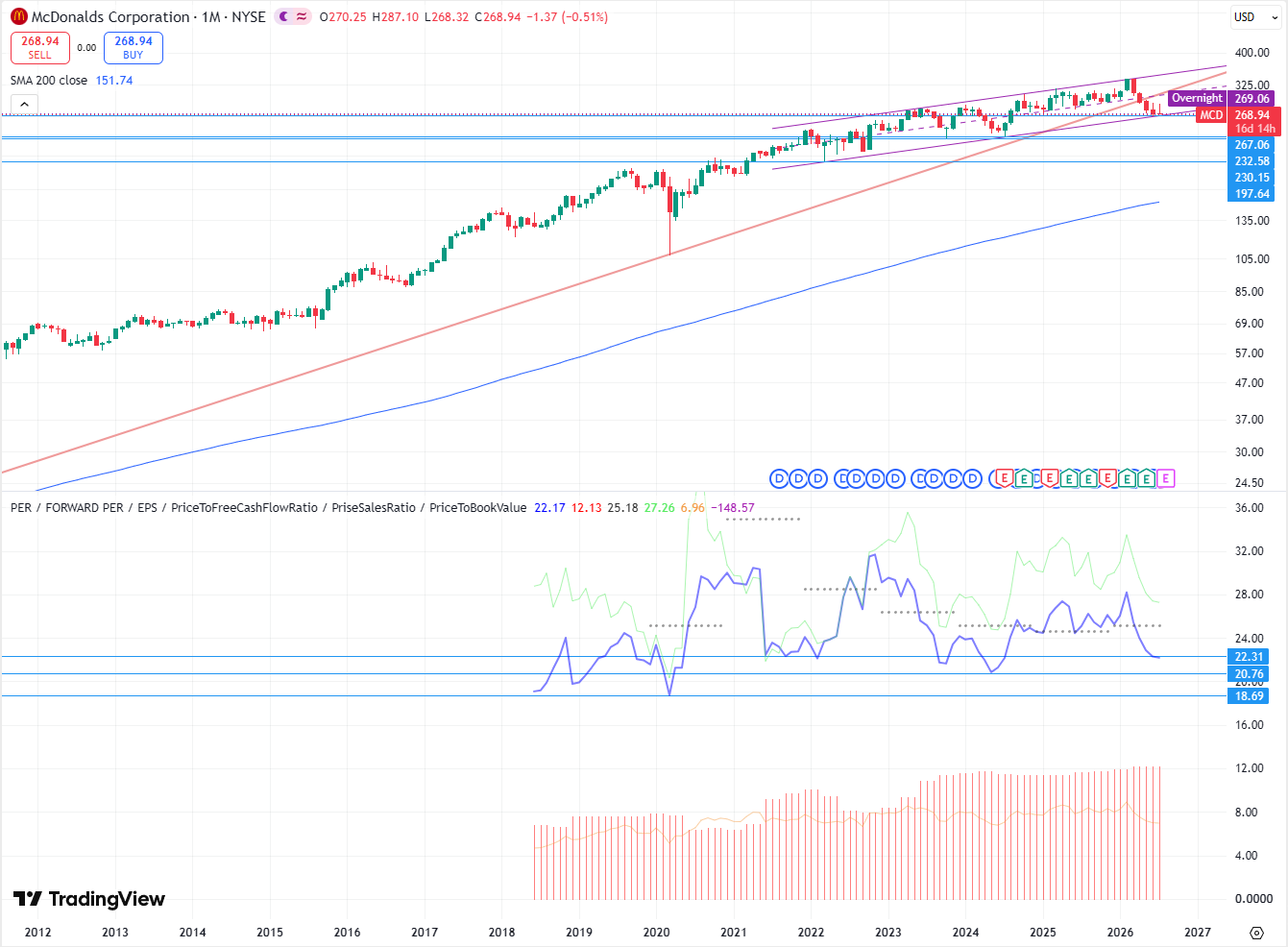
MCD cotiza ahora mismo con un PER de entorno a 22-23x. Eso es entre un 10% y un 13% por debajo de su media de los últimos 3, 5 y 10 años, que ronda las 25-26x. No es un chollo histórico tipo covid-crash, pero sí es de los múltiplos más bajos que ha tenido la acción en bastante tiempo.
Un PER 22 en una empresa que crece ingresos al 3-4% anual no es barato en términos absolutos. Es barato en términos relativos a su propia historia.
Encontrando la Rentabilidad Esperada a Partir del Cost of Equity
Puesto que McDonald’s es una dividendera clásica, voy a empezar realizando un Dividend Discount Model. En este caso la idea no es utilizar el cost of equity consensuado por los analistas, sino forzar un cost of equity que ajuste el valor intrínseco al valor actual de la acción. Puesto que en el DDM se descuentan flujos que van a parar al accionista (no a los acreedores), una vez despejada la X del cost of equity para valor intrínseco igual a valor actual, podemos tomar ese cost of equity como el retorno anual para el accionista comprando al precio actual de la acción. Esto es lo que se llama implied cost of capital — y como decíamos, a diferencia del DCF, en un DDM ese número sí equivale al retorno total que puedo esperar como accionista (dividend yield + crecimiento), si mis proyecciones de dividendo se cumplen.
He utilizado un crecimiento esperado del dividendo a 5 años del 5%. Bastante conservador, porque si miramos el crecimiento de los últimos años, vemos que ha sido superior.

Usamos Terminal Dividend Growth Rate (g) 2.5%.
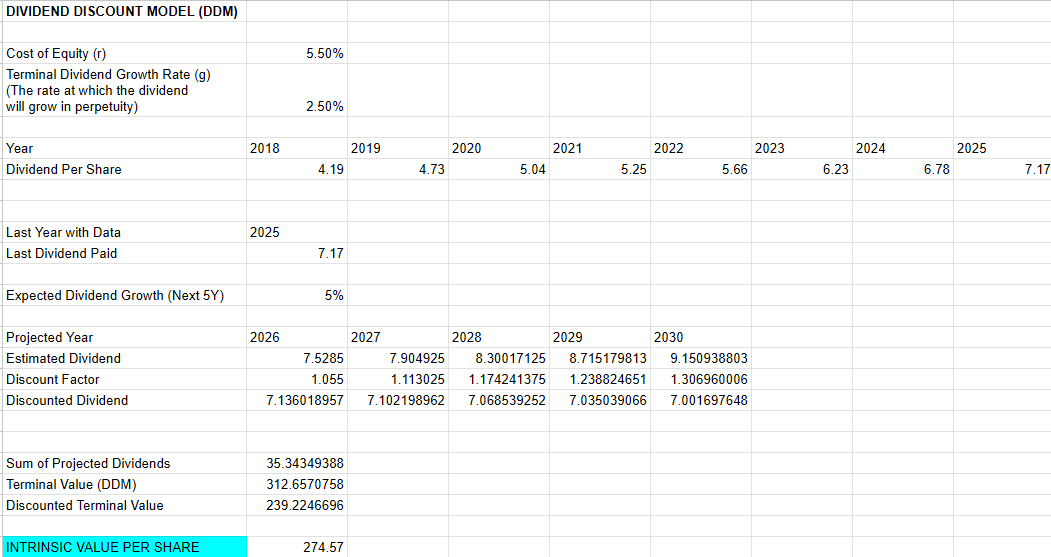
Con esta configuración, para obtener un valor intrínseco parecido al precio actual, necesitamos un cost of equity de aproximadamente 5.5%. Puesto que hemos hecho algunas estimaciones como un g de 2.5% y un crecimiento de dividendo de 5% para los próximos 5 años, es preferible tratarlo como un rango (5-6%) más que como un número con decimales de precisión. Y ese rango sería nuestra estimación de la rentabilidad que podemos esperar de McDonald's.
¿Es Eso Mucho o Poco? El Dato Incómodo
El bono del Tesoro americano a 10 años cotiza ahora mismo en torno al 4.5-4.6%. Si aplico el modelo estándar para estimar cuánto retorno debería exigir el mercado a una acción como MCD (CAPM: risk-free + beta × prima de riesgo), con una beta razonable para MCD (0.6-0.7, la que reportan la mayoría de proveedores de datos), sale un cost of equity “teórico” de en torno al 7-7.5%.
Es decir: el mercado, al precio actual, solo me está pagando un 5-6% de retorno esperado vía dividendo y crecimiento, cuando el riesgo sistemático de la acción, según el modelo estándar, justificaría exigir más, cerca del 7-7.5%. El mercado paga muy poca prima por el riesgo de McDonald’s, porque valora tanto la previsibilidad y el perfil “bono-proxy” del negocio, que le perdona parte de esa prima que otro tipo de acciones sí tendría que ofrecer.
Entonces, ¿Por Qué Sigo Comprando?
Porque ese 5-6% no es un mal retorno para el nivel de riesgo real que percibo en el negocio, aunque el CAPM de manual diría que debería exigir más. Y sobre todo porque:
Es un negocio con foso competitivo brutal, poder de fijación de precios, un componente semi-inmobiliario (los alquileres a franquiciados son básicamente una renta), y una previsibilidad de caja que muy pocas empresas del mundo tienen.
Ese retorno no depende de que el mercado me re-rate el múltiplo. Depende solo de crecimiento orgánico + dividendo, que es justamente el tipo de retorno que menos me falla cuando las cosas se ponen feas en el resto de la cartera.
Porque se ha comportado bien en momentos complicados para el mercado, por ejemplo el 2008.
Y esto es lo más importante para mí: es la posición que me deja dormir. No la compro por asimetría de rentabilidad, la compro porque a este precio el retorno esperado, aunque modesto, viene con muchísima menos incertidumbre que en casi cualquier otro sitio donde podría poner ese dinero.
Discounted Cash Flow Para Comparar con la Competencia
Voy a hacer un ejercicio parecido con un DCF clásico. Usaré un crecimiento de revenue del 3.79%, media desde 2018, y margen de conversión de revenue a FCF del 25.74%, también media desde 2018. Y un valor terminal g del 2.5%.
Y con estos valores voy a buscar un WACC con el que obtenga un valor intrínseco similar al precio actual:
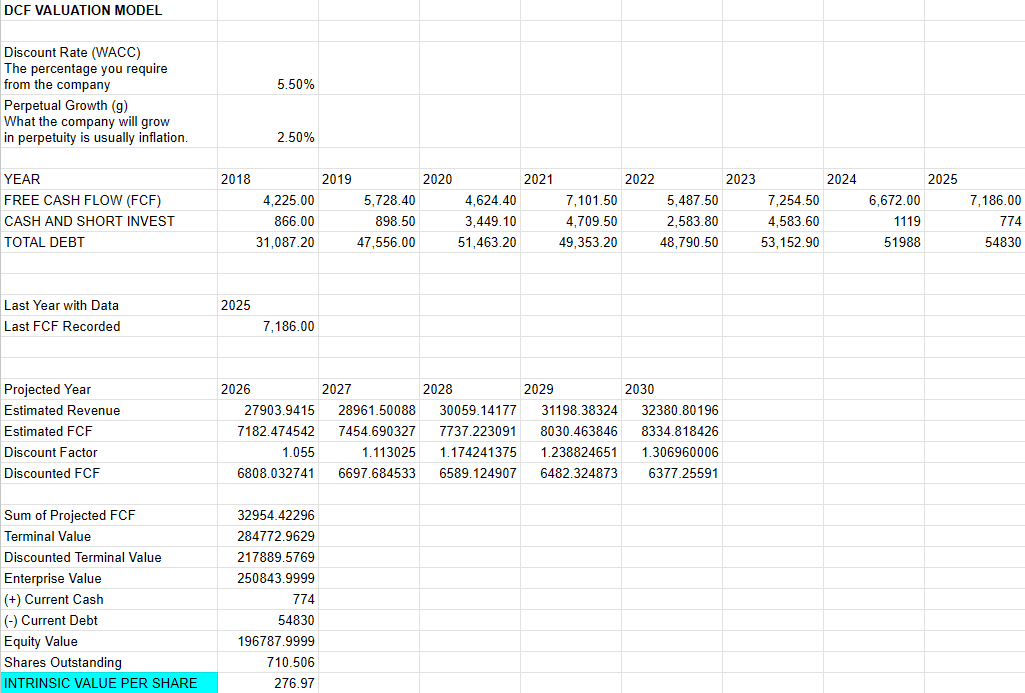
Curiosamente obtengo un WACC similar al cost of equity del DDM. No podemos asumir que el WACC equivale a la rentabilidad anual para el accionista porque en el WACC va incluido lo que la empresa tiene para el accionista y para los acreedores (por ejemplo para los bonistas). Sin embargo es curioso que salga un valor similar al cost of equity del DDM. Entiendo que esto es debido a que, a pesar de que McDonald’s tiene bastante deuda, genera tanto flujo de caja, que pagar la deuda no es un problema (y que probablemente se financie bastante barato). Además hay que tener en cuenta que utilicé un crecimiento del dividendo muy conservador, de 5% solamente.
En cualquier caso mi objetivo era más obtener un WACC para el precio actual de la acción, por un lado para compararlo con el WACC consensuado por analistas para McDonald’s, que se sitúa entre 7~7.5%. Y por otro para compararlo con competidores como QSR o Starbucks.
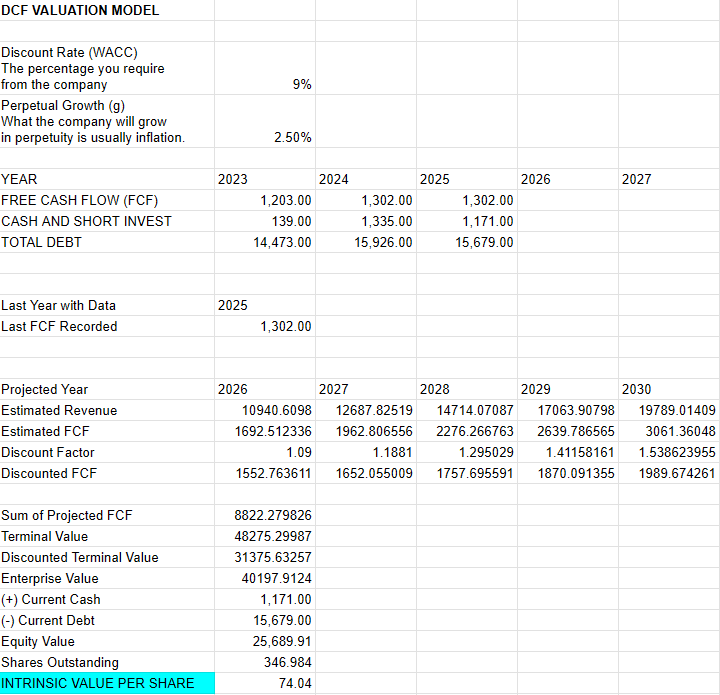
En el caso de QSR, si realizo el mismo ejercicio, obtengo un WACC del 9% para ajustar el valor intrínseco al precio actual:
Para Starbucks obtengo un WACC del 5.3%:
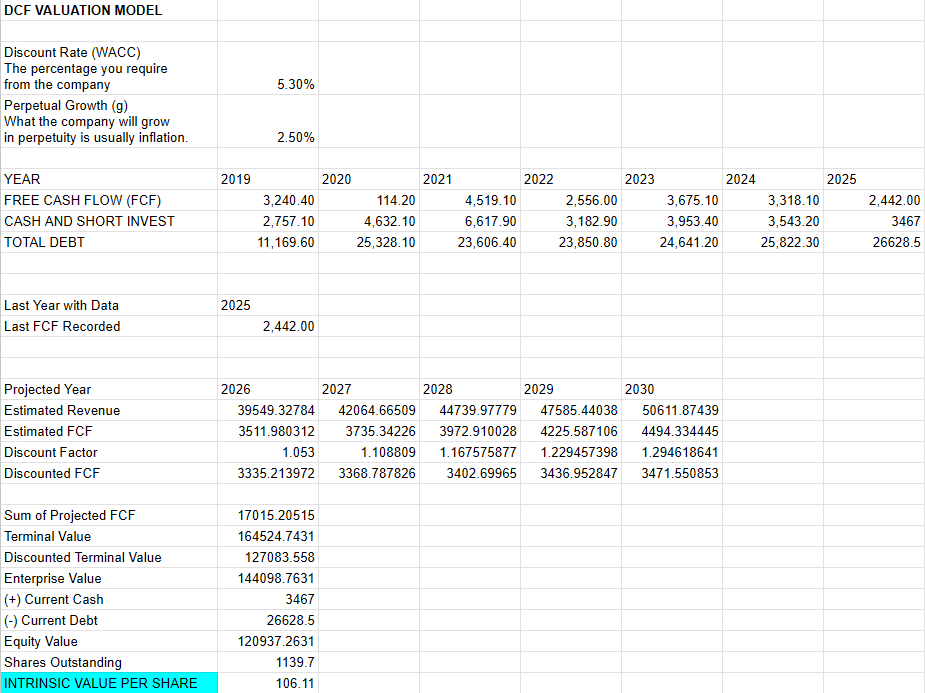
Por lo tanto, si hacemos el ejercicio de buscar un WACC que fuerce el valor intrínseco al precio actual, obtenemos un WACC del 9% para QSR, del 5.5% para MCD y del 5.3% para SBUX, al precio en que se realizaron los cálculos.
Esto podría darnos una idea de que QSR podría estar más barata que MCD y SBUX. De hecho, haciendo el ejercicio que hicimos con el DDM para QSR, obtengo una rentabilidad anual del 6.3%, y para SBUX, del 5.2%.
¿Entonces, Por Qué MCD y no QSR?
McDonald’s no es solo una empresa de comida rápida, es un cartel inmobiliario. Compra o alquila los terrenos y locales más codiciados del mundo y los subalquila a sus franquiciados. Esto le asegura ingresos estables por alquiler y regalías que no dependen únicamente de la venta de hamburguesas.
QSR utiliza más un modelo puramente de franquicia, careciendo de este gigantesco portafolio de bienes raíces.
Por otro lado, gracias a su escala global y a su estructura de negocio, MCD tiene márgenes operativos líderes en el sector. MCD históricamente mantiene márgenes operativos cercanos al 46%, mientras que QSR suele rondar márgenes operativos próximos al 26%. MCD necesita generar menos crecimiento de ventas para obtener el mismo beneficio neto que sus competidores.
Además tiene una fortaleza de marca y escala superiores. McDonald’s es una de las marcas más reconocidas del mundo. Esto se traduce en un tráfico masivo y un poder de negociación con proveedores que cadenas como Burger King, Popeyes o Tim Hortons (marcas de QSR) no tienen.
Conclusión y Cuidadín
No todas las posiciones de una cartera tienen que ser la mejor idea de rentabilidad-riesgo del mundo. Algunas están para dar rentabilidad ajustada al riesgo bajo, previsibilidad, y sobre todo, paz mental para poder mantener el resto de la cartera con la cabeza fría cuando las cosas se ponen feas en otro sitio. MCD, para mí, es eso. Un ~5-6% anual, con esta calidad de negocio detrás, es un retorno por el que firmo. Y si el precio sigue cayendo, la ecuación solo mejora — sigo ampliando.
Sea como sea, como siempre, esto no es ninguna recomendación de compra. Ninguna empresa es 100% segura y mañana mismo la narrativa del mercado puede cambiar por completo con respecto a McDonald’s, como ya cambió con respecto a otros pesos pesados, como la infame Diageo. Si mañana una bacteria rarísima afecta a un montón de consumidores de McDonald’s, se va a liar. Si los chavales dejan de comer hamburguesas como supuestamente han dejado de beber o fumar (o al menos el mercado compra esa narrativa), se va a liar. Si Ozempic nos pone a todos a dieta, se va a liar. Así que como siempre, haced vuestro propio análisis y valorad los riesgos.
Un saludo a todos.
Buen análisis , si leí bien wacc del 5-6% en MCD para mi es demasiado bajo, si lo que quieres es valorar. Yo usaria 8-8.5, …. Mínimo de los a mínimos 7. Un saludo suerte con tus inversiones.